The Wall of Sameness
I’ve reviewed a lot of engineers. Résumés, take-homes, portfolios, hiring loops. And something has changed in the last two years, quietly and completely: the résumés have started to blur together.
Not because the candidates got worse. Because the tools got better.
Everyone has a clean GitHub now. Everyone shipped a full-stack app, a chatbot, a “machine learning project.” The code compiles, the README is tidy, and an AI helped write most of it — and it shows. Not because it’s bad. Because it’s the same. A hundred competent, plausible, interchangeable projects.
I’ll say the quiet part out loud, because a lot of new graduates are feeling it and being told it’s their fault: the entry-level job you were training for is disappearing. The one where you sifted the data, built the dashboard, cleaned the report, wrote the boilerplate — that was the on-ramp, and AI drives it now.
The rung is gone.
That’s the real anxiety underneath the “AI is taking jobs” headline. It isn’t that AI takes the senior architect’s job. It’s that it takes the job that used to turn a graduate into a senior architect.
So if you’re graduating into this, the question isn’t “how do I look competent?” Everyone looks competent now. The question is sharper, and a little scary: what can you show that a prompt can’t produce?
What I Actually Look For Now
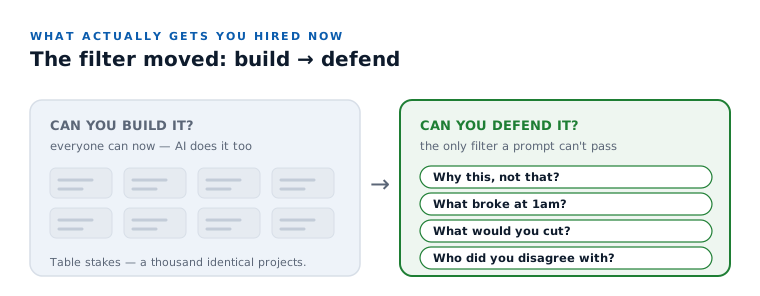
Here’s what changed on my side of the table.
I used to learn a lot from whether someone could build the thing. Now everyone can build the thing — or get a machine to. So “can you build it” tells me almost nothing anymore. It’s table stakes, and the table is crowded.
What I look for now is older, and much harder to fake: can you defend it?
Give me one real project you actually care about, and I won’t ask whether it worked. I’ll ask: why this approach and not the other one? What broke, and what did you do at 1 am when it broke? What would you cut if you had half the time? Who did you disagree with on the team, and how did it resolve? What’s the part you’re still not happy with?
You cannot generate your way through that conversation. A person who did the work answers it in their own voice — with specifics, with scars. A person who watched a machine do it runs out of answers in about ninety seconds.
That filter isn’t new. AI just made it the only one that matters, because it quietly deleted everything you used to be able to hide behind.
The Standouts Already Trained for This
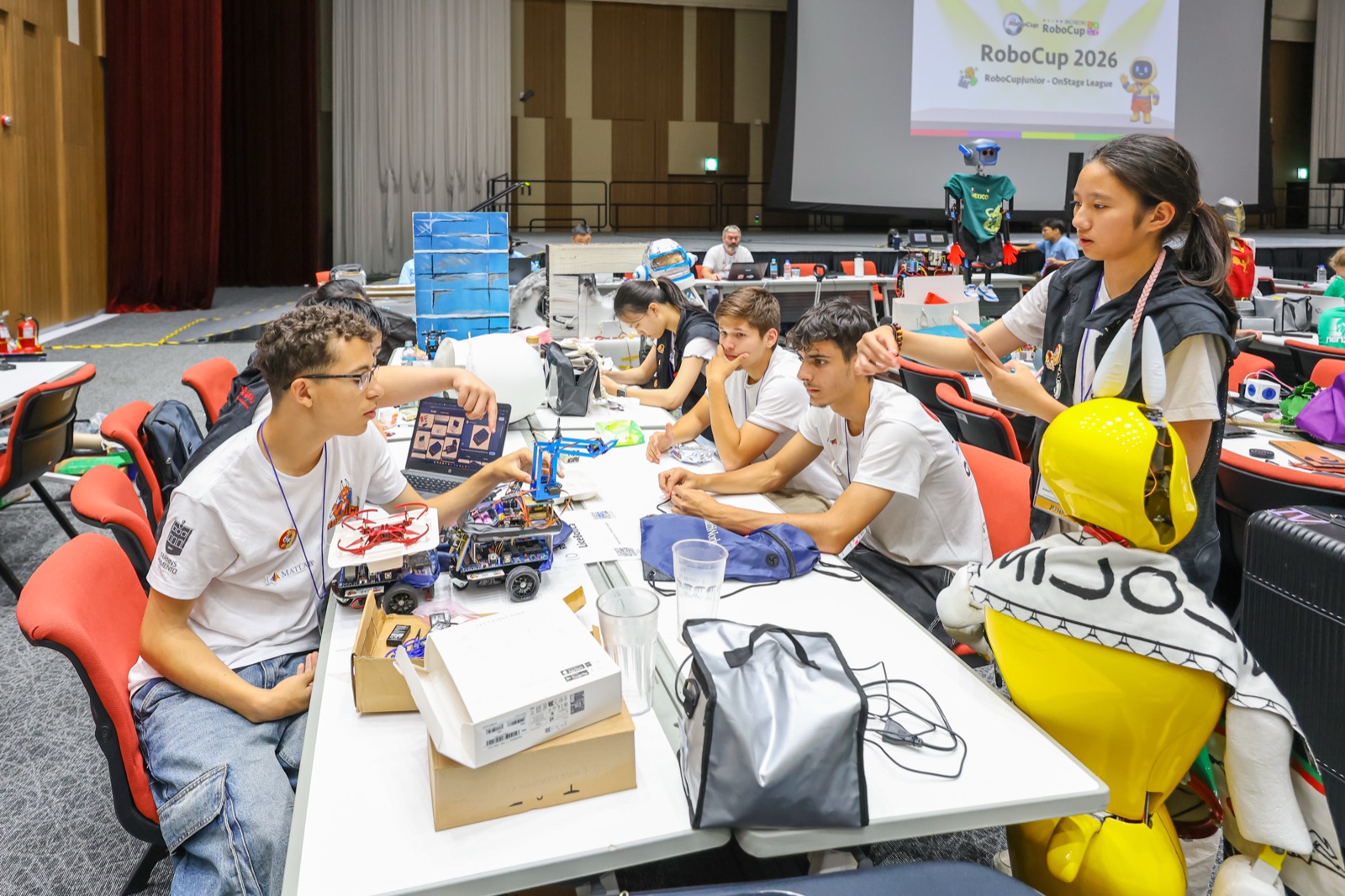
Which brings me to a group of people I’ve watched for fifteen years, long before any of this was a headline.
At RoboCupJunior, teenagers build fully autonomous robots — machines that have to perceive, decide, and act with nobody holding the controls — and then defend them in front of judges while they sometimes fail on the floor, in public. A sensor dies an hour before a final, and the team has to re-plan out loud, under a clock. Nobody gets to specialize their way out of the parts they’re bad at: it’s code and mechanics and design and a five-minute pitch, all at once.
Read that back and notice something. That is, almost exactly, the job now. Not the grunt work — the grunt work is gone. The judgment. The collaboration under pressure. The owning of a real thing that can fail where everyone can see it.
And name what those really are: soft skills — the kind that never fit neatly on a résumé, and that no prompt can fake. Systems thinking across code, hardware, and strategy at once. Composure when the plan breaks in front of an audience. Gracious teamwork under a running clock. And the rarest one: knowing exactly how your own creation fails, and how to get it back on its feet before the next match. On a RoboCup field, diagnosing your own problem and fixing it live is the whole game — and it turns out to be most of the job in engineering, too.
I’m not saying this because I help govern RoboCupJunior. I’m saying it because when I sit across from someone who did it, the interview goes differently. They have real answers, in their own voice, because they lived it.
Here’s the moment that made it undeniable for me. This year, three RoboCupJunior champion teams — from Croatia, Slovakia, and Germany — combined into one squad and took a run at a Major research league, the kind normally populated by university labs. Robots built by teenagers, holding their own several rungs up. Nobody handed them the next rung. They built it themselves.
That is the exact instinct the AI-era job market is desperate for and terrible at screening: not “can you follow the path,” but “can you build one when the path runs out?”
So What Do You Actually Do?
If you’re a student — or you mentor one — most of the advice floating around (“put it on LinkedIn, build a portfolio, network early”) is true and useless, because everyone is already doing it. Here’s the sharper version.
Stop hiding your failures — curate them. The clean success story is what everyone submits, and what AI writes best. The moment you can say “here’s where it broke and here’s the ugly thing I did to save it,” you’ve said something a machine can’t. Document the journey, not just the result.
Be able to defend every decision. Pick one project and know it cold — not the happy path, the trade-offs. If you can’t explain why you chose X over Y, you didn’t really choose. The tool did.
Show the human parts on purpose. The disagreement you navigated. The teammate you carried, or who carried you. The pitch you gave when the demo died. Those are the parts of a résumé AI can’t generate — and they’re exactly the parts hiring is now filtering for.
And underneath all three: do something real and hard, with other people, that’s allowed to fail in public. That’s the whole recipe. It doesn’t have to be RoboCup. RoboCup happens to be one of the best versions of it I know — which is why I’ve given fifteen years to it.
The Market Is Filtering for the Humans
Here’s the reframe I’d leave a graduate with, because the headlines are frightening and mostly wrong about the fix.
AI didn’t raise the bar on how much you can build. It erased that bar. What’s left is a bar on judgment, ownership, and the ability to work with other people on something that matters — and that was always the real bar. We just used to be able to hide behind the grunt work.
What I learned: the people who’ll do well over the next decade aren’t the ones with the cleanest AI-assisted project. They’re the ones who can sit in a hard conversation about a real thing they built and answer every question in their own voice.
Why it mattered: it changed what I tell scared students. The tools got faster; being a person who can be trusted with hard problems got rarer and more valuable. If you’ve ever stood in front of judges next to a robot that might fall over, you already know how that feels — and you’re more ready than the market is telling you.
AI made “can you build it” worthless and “can you defend it” everything. Do one real, hard thing with other people — and be able to answer for every part of it.