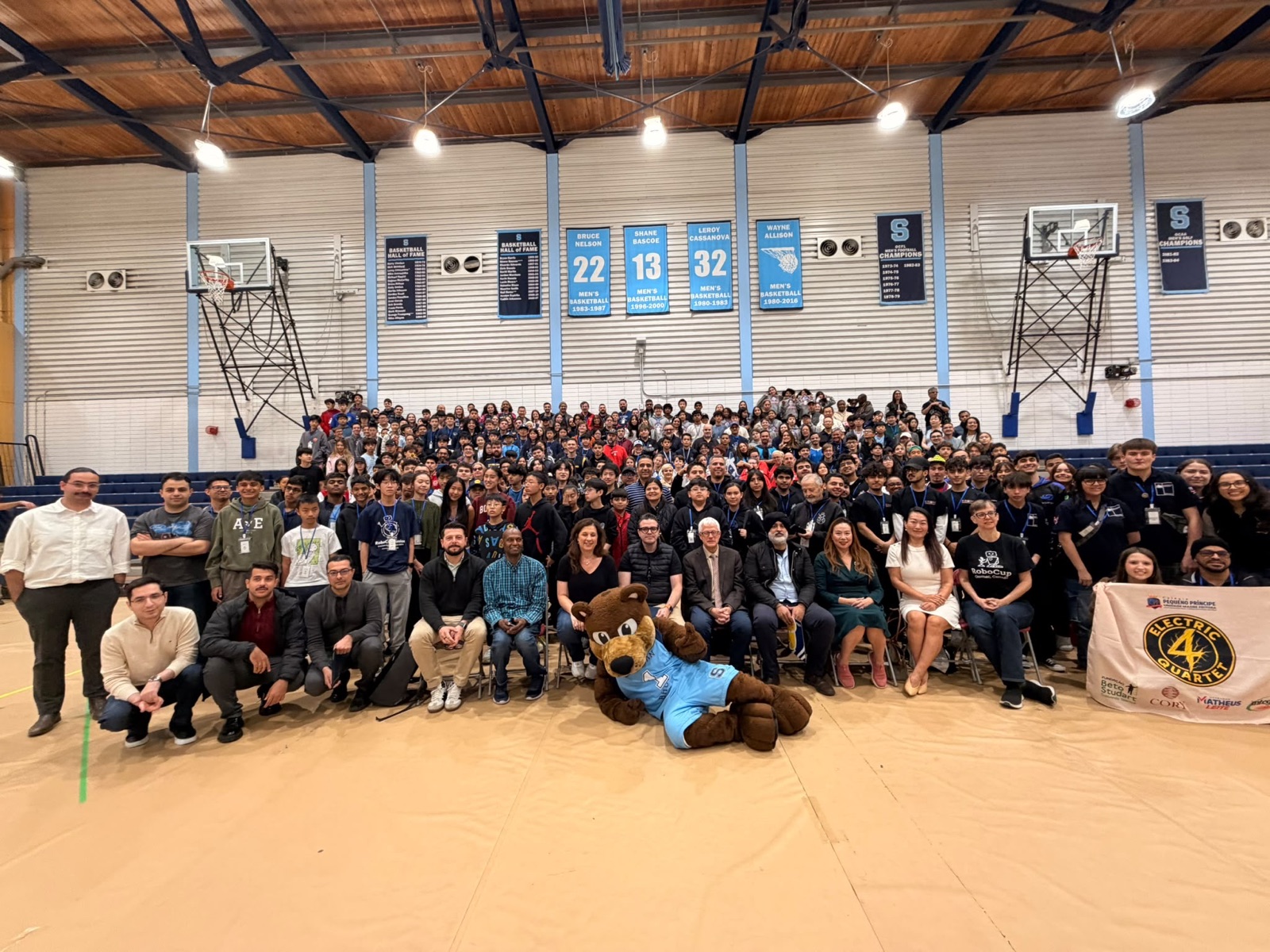
On Sunday afternoon, at the closing ceremony in Brampton, I asked the students to take a second and look around the gym. They came from seven countries and spoke different languages. The students around them wanted the same things they did: to build something they were proud of, and to see how far they could go.
It was the second time that gathering had come together, and the second time is the one I’d been waiting to see.
Where it started
In April 2025, Mercersburg Academy in Pennsylvania hosted the first RoboCupJunior Americas SuperRegional. Julia Maurer and I started it with one idea: teams across the Americas deserve an international competition close to home. Seventy-two teams came — 217 students from eight countries.
Primary competitions, for students aged 10 to 14, were last offered at the world championship in 2014. The first SuperRegional brought them back to an international stage in the Americas, alongside the Entry teams. For many of those teams, it was their first international competition.
On the last day, the SuperTeams mixed teams from different countries and handed them problems none of them had seen before. Watching them work it out together was the most inspiring part of the whole event, more than any ranking.
Starting something like that is hard. There were loose ends everywhere, and we were still learning when it ended.
Why the second year matters
Doing it a second time is a different kind of test. It needs a new host willing to take it on, a new committee, new volunteers, and teams who decide it was worth coming back for.
When it was time for the second edition, Canada said a firm yes. RoboCup Canada hosted it at Sheridan College’s Davis Campus in Brampton, eighteen months after the first: a different country, a different organizing committee, the same idea.
My role changed too. Last year I helped start it. This year I came as a founding trustee of RoboCup Americas, and at the closing ceremony I spoke on behalf of the RoboCup Federation.
Sixty-four teams registered this year, with 217 students, from seven countries: Canada, Brazil, the United States, Mexico, Argentina, Chile, and Panama. Chile and Panama took part for the first time. Brazil registered eighteen teams, second only to the host, and every country on the list this time was from the Americas.
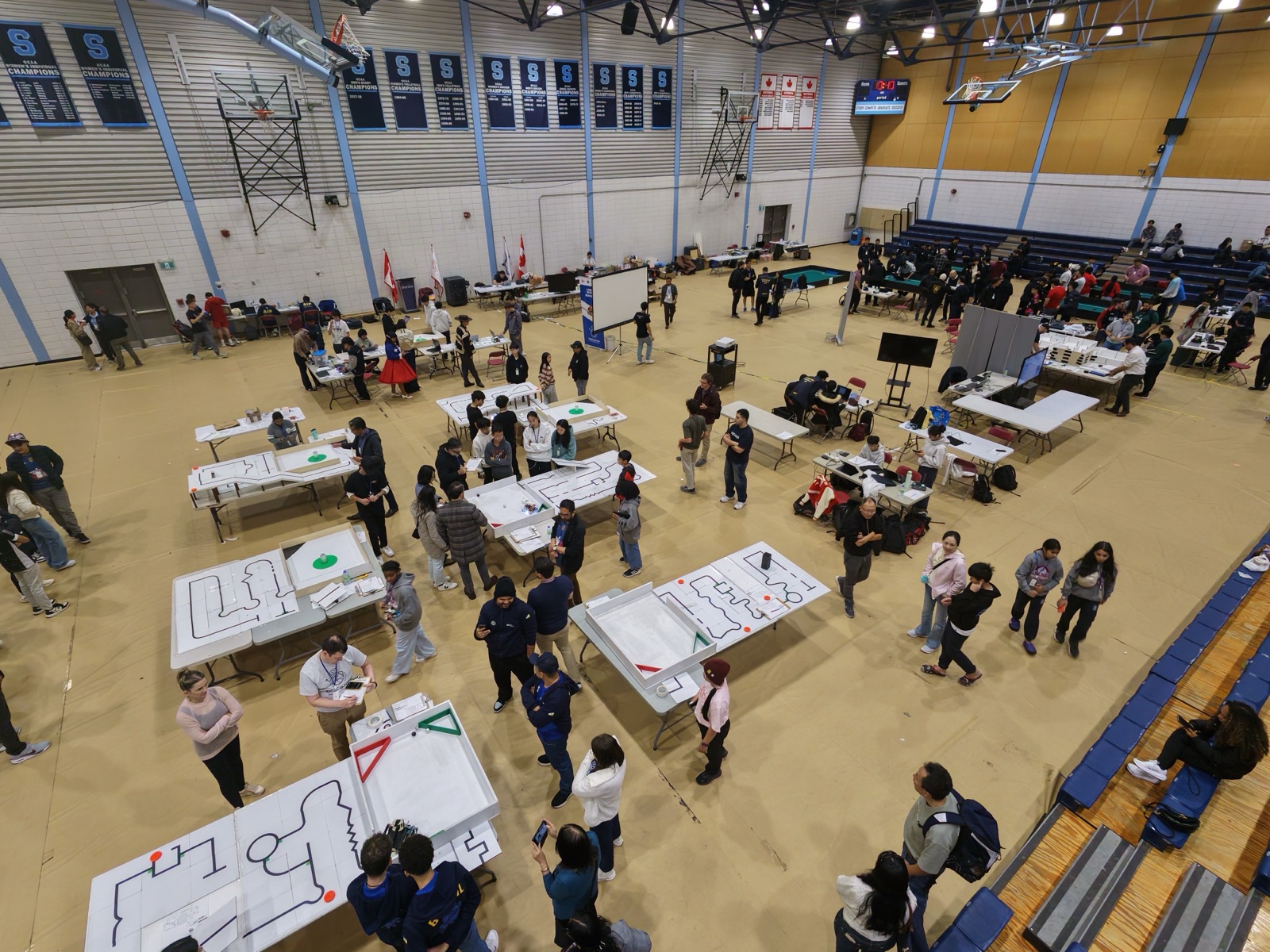
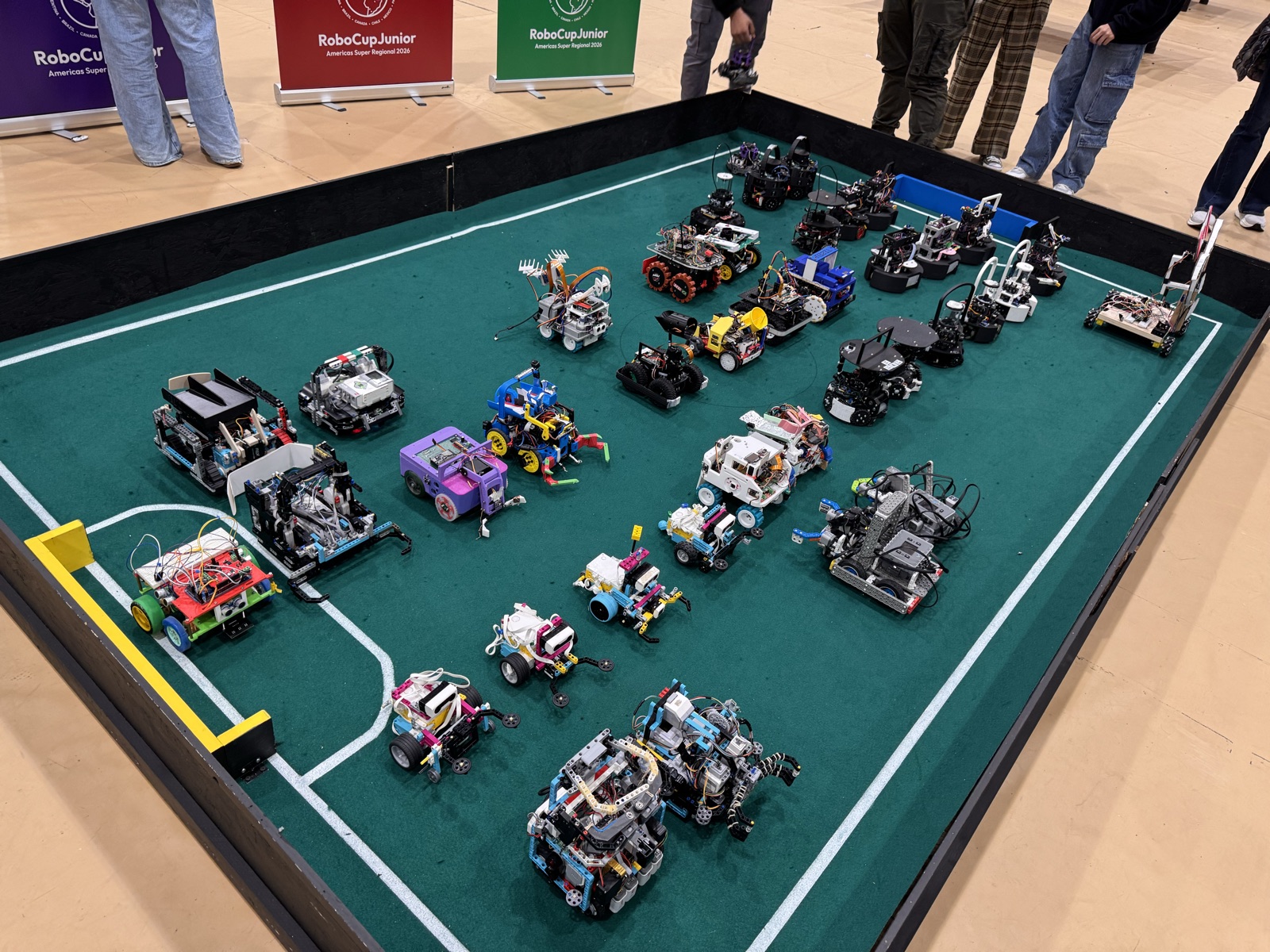
They competed in OnStage, Rescue Line, Rescue Maze, Rescue Simulation, Soccer Infrared, and Soccer Vision, with Primary and Entry divisions again, so the youngest teams had their own stage.
What the week asked of them
Every RoboCupJunior event has the same hard moments. A robot that worked at home stops working on the field. A run that went well in practice goes wrong in front of the referee. One mistake costs the team points, and sometimes the problem remains on the last day. That hurts, and it hurts because they cared.
In my closing remarks, I asked the students to think about who had helped them through those moments. Maybe a teammate said, “Let’s look at it again.” Maybe a team from another country lent them a cable, or helped them find the bug. Maybe the problem never went away, and they kept going anyway, and still found a way to laugh together.
Perseverance is what makes a RoboCupper: you keep trying even when you can’t fix the problem, and you help the team next to you keep going too. Years from now, they may forget their score. They will remember who stayed next to them when things went wrong.
What it means for the Americas
The Americas have always sent teams to the international championship, but places there are limited. Since 2025, the region also has a stage of its own. At the SuperRegional, each region in the Americas can earn up to three places in each league it runs, as far as the venue allows, plus extra places for the host country. It is also where a team from one country can learn from a team from another before the world championship.
Some of that week stays behind. The competition fields go on to Canadian regional events, and the public came in for free.
The hardest part is still getting here. Travel costs and visas are the main barriers — and not every team that wanted to come could. That is one reason the event should keep moving. The call for future hosts will be open to every region in the Americas, and we are working with the regional representatives to give the SuperRegional a permanent structure.
Two editions, in two countries, run by two different committees, show that the idea travels.
Thank you
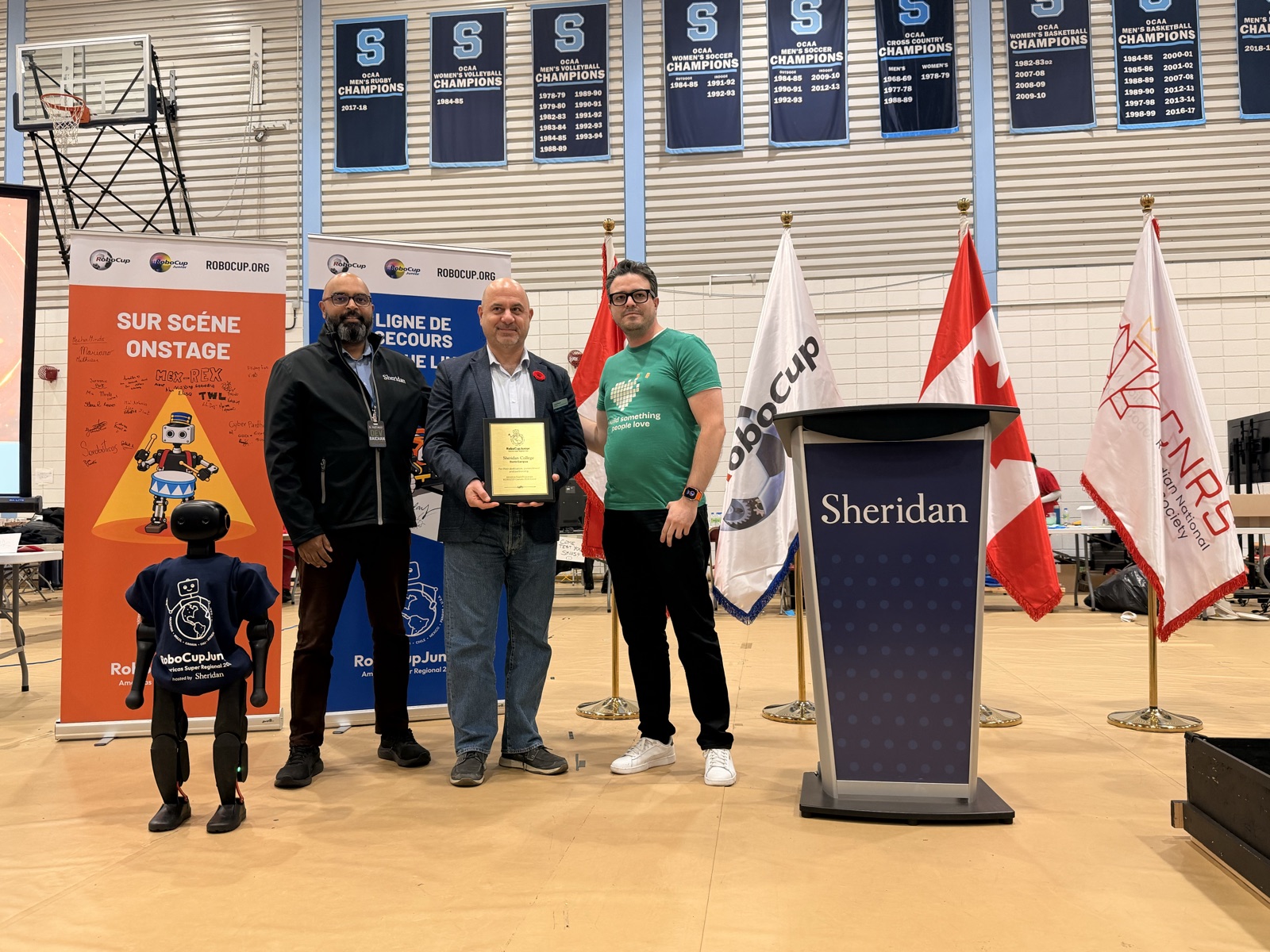
Thank you to Shaun Callender and RoboCup Canada for that yes, and to Sheridan College for hosting us. Thank you to Samia Karimi, who chaired the Organizing Committee, and to the CNRS team and the organizers from different schools, who worked for months to prepare for one week. Thank you to the referees, judges, and volunteers who gave up their weekend so the students could compete, and to the mentors, parents, and chaperones who got these teams to Brampton.
And thank you to the students. Whatever awards they took home, the award was for that day. What they learned, and the friends they made from other countries, they keep.
The SuperRegional is built for the community, by the community, and we’ve still got a lot to build. If you want to help with a future edition, as a volunteer, a referee, a judge, or a host, write to me. We want to build something we can all call home.