The Line That Wasn’t Supposed to Exist
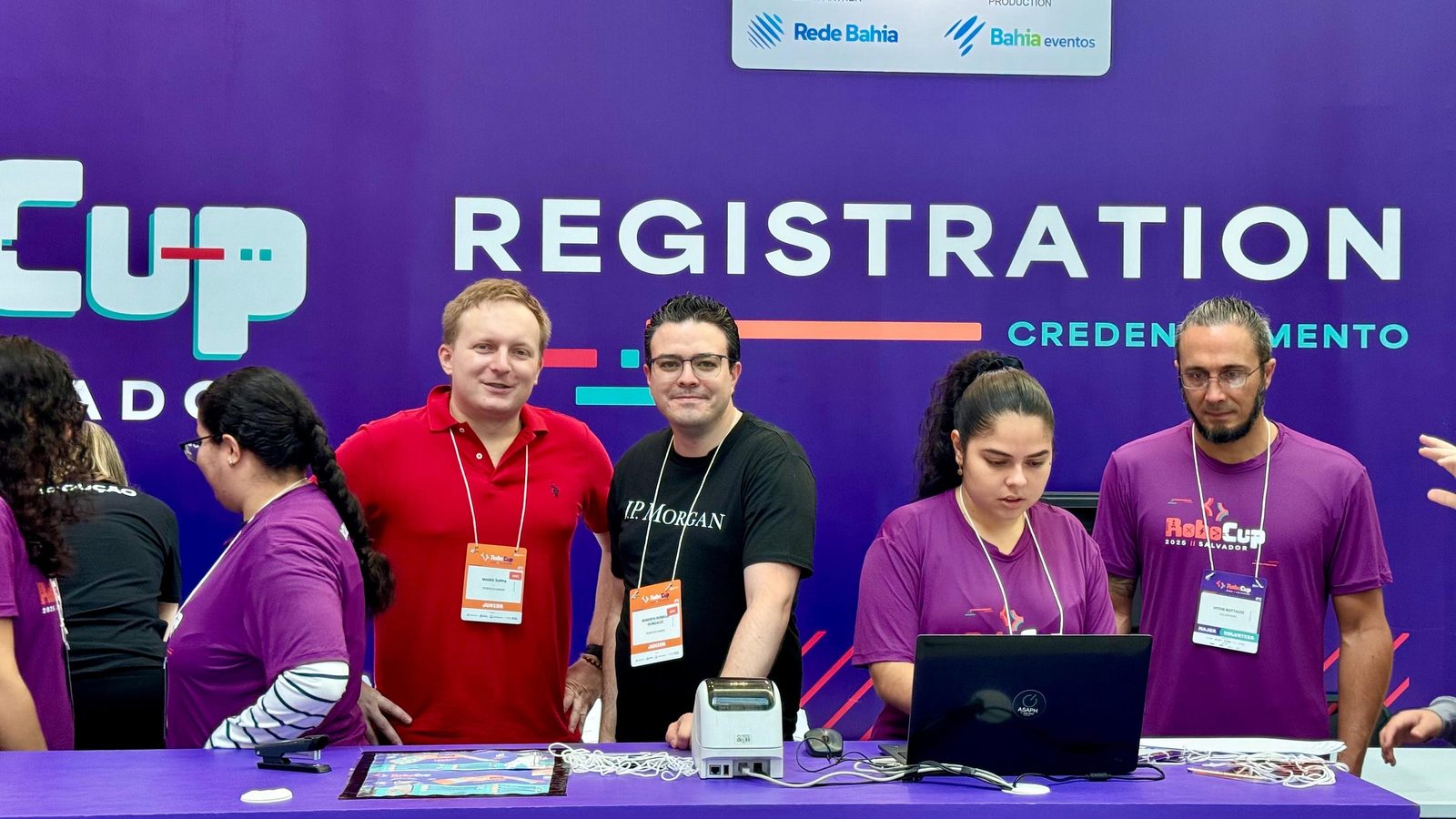
Picture roughly 500 teams — kids from 40-plus countries, some of whom had been traveling for two days straight — standing in a check-in line instead of setting up their robots. Around 8 to 10 minutes a team, on a smooth run. A steady stream of badging issues on top of that: wrong attendee type, missing waiver, a name that didn’t match what was printed. Multiply that by 500, and you get a line long enough that some teams lost practice time they’d never get back before their first match.
That’s not an efficiency problem. For an organization whose entire purpose is getting a student in front of a robot, a line at the door is a mission problem.
Marek Šuppa and I fixed it. Just the two of us. And I want to be precise about why that’s true, because it’s not the underdog story it sounds like.
Not the Underdog Story It Sounds Like
Marek isn’t a hobbyist who happens to know some software. He’s Head of Data at Slido, where he’s spent eight years scaling the data team from 3 people to 14, standing up Data Engineering, Analytics Engineering, and Data Science as real functions, and shipping ML-enabled features from prototype into production — on top of lecturing at Comenius University in Bratislava. I’m not a volunteer dabbling in tech on the side. I’m a Vice President and Expert Engineer at JPMorgan Chase — a credential held by fewer than 5% of the firm’s technologists worldwide, earned by architecting data platforms across 6 engineering centers and 9 international markets. We didn’t stumble into fixing this. We were, by any honest measure, exactly the kind of people you’d want owning a problem like this — we just happened to be doing it as volunteers.
Here’s what two people like that actually got that a bigger team rarely does: no one to negotiate with. No steering committee to socialize a design decision through. No stakeholder alignment meeting before we could change how a form worked. No handoffs between the person who understood the participant experience and the person who understood the API. RoboCup Federation gave us the whole problem, end to end, and then got out of the way.
That’s the part worth naming clearly: the size of the team wasn’t the constraint we overcame. It was the condition that allowed two genuinely capable people to move at the speed of their own judgment rather than the speed of consensus. Add more people to a project like this, and you don’t automatically get more capability — you often get more meetings, more approval layers, and less ownership per person. Two trusted experts with full context can out-execute a larger team that’s spending half its energy staying aligned with itself.
We Didn’t Start With the Software
What we did with that trust is what actually matters — and it’s not about Cvent, the platform we used.
We didn’t open with “how do we configure the registration tool better.” We started with “what does a 16-year-old and her team actually need to walk onto that competition floor with zero friction.” Only after we had a real answer to that did we go looking for how to build it.
That answer became the architecture:
- Where Cvent’s native capabilities could get us there, we used them to the fullest. Registration, Event Website, OnArrival Basic, Reports & Access Portal — five separate products, deployed as one connected pipeline instead of five disconnected tools nobody fully used.
- Where the platform stopped, we built. A custom automation layer, written against Cvent’s REST API, that validates age eligibility for 800–1,200 Junior participants against a hard cutoff, generates embassy-appropriate visa letters, reconciles payments, and writes every result back into Cvent as the single source of truth — our own systems and Cvent syncing in both directions, not just one tool pulling data from another.
That combination — native where it’s enough, custom where it isn’t — is the actual skill, and it’s the kind of judgment call that’s hard to make by committee. Someone has to own the whole picture to know when “use the platform” is right and when “build it ourselves” is right. Trust makes that judgment possible. Bureaucracy usually kills it before it gets exercised.
What Two People Actually Moved
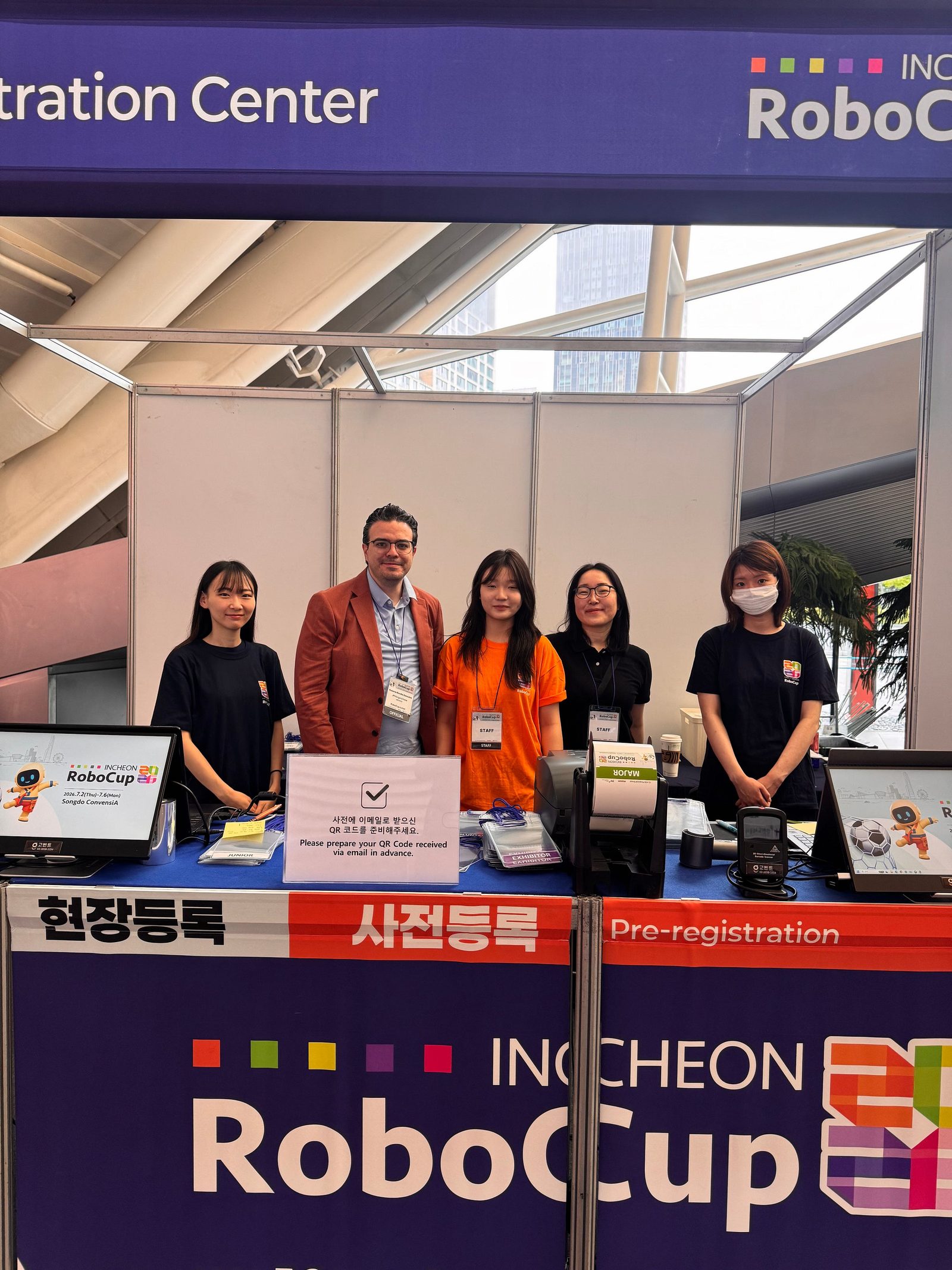
The numbers, because they’re real, and because they’re what genuine capability plus real ownership produces:
- On-site check-in: ~8–10 minutes a team → ~2 minutes, across 500+ teams
- Abandoned registrations: 60 in one year → 1 the first redesigned cycle (a 98% drop)
- Payment leakage: $100K+ unreconciled in a single year → $0
- Visa letters: 628 processed in the first redesigned cycle with zero errors attributable to the pipeline; 833 processed this year with a single error across the whole cycle
- Revenue: an all-time record this year, collected at a 100% rate
- Walk-in registrations: added for the first time this year — teams who showed up without completing registration in advance could still be processed on-site instead of turned away
- Cost: zero additional platform spend. Every gain came from fully using what RoboCup already had and filling the gaps ourselves.
That’s not a “did well considering it was just volunteers” list. That’s what happens when you put real expertise on a problem and don’t make it ask permission to act on what it knows.
Then We Found Out How That Measured Up
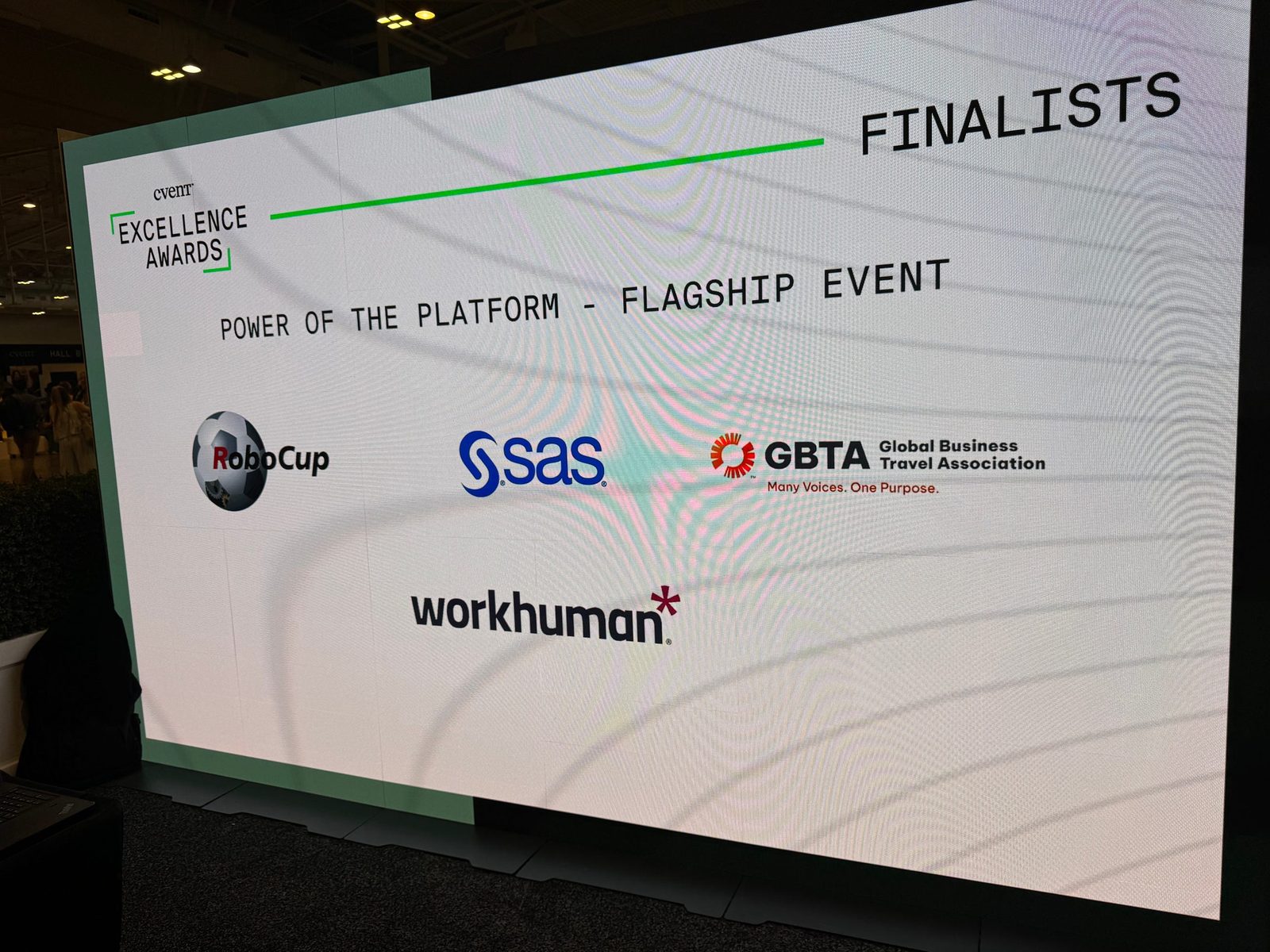
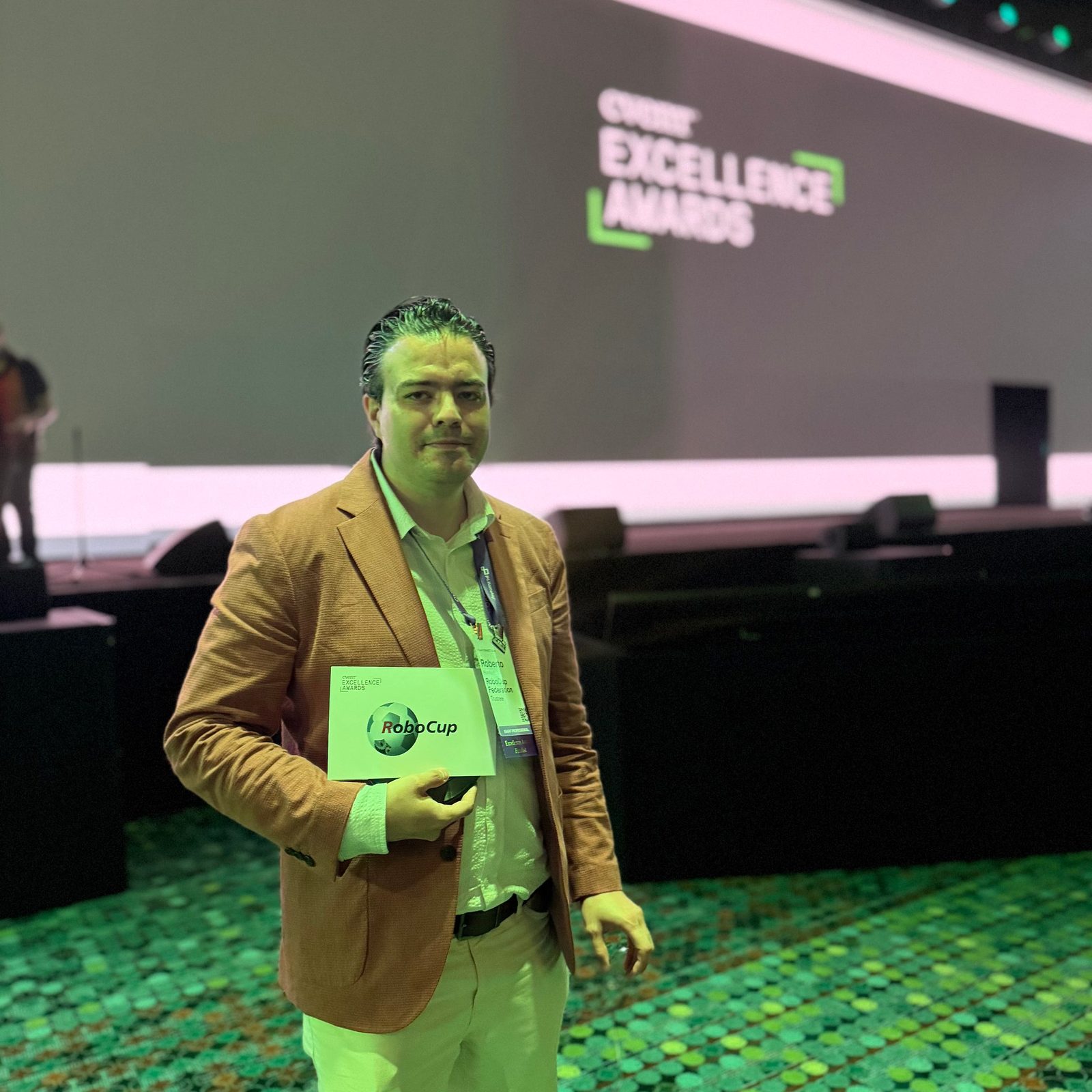
For a long time, I described this story only in RoboCup terms, because RoboCup was the whole audience. That changed in July, at Cvent CONNECT in Nashville — nearly 5,000 people, the largest CONNECT the company has run — when RoboCup Federation turned up as a finalist for Cvent’s Power of the Platform: Flagship Event award, alongside GBTA, SAS Institute, and Workhuman. Every one of those three has a full event-technology team behind their submission.
Introducing the category, Cvent’s SVP of Marketing, Stacey Fontenot, said: “We’re at the last two awards of the night and our biggest.” Cvent itself serves 445,000+ users across 34,000+ organizations and sources $20B+ in group business a year — a company operating in an event-software market worth roughly $18–20 billion this year, by most estimates, and expected to roughly double within a decade.
That’s the scale our build was being measured against when the judges put it in the top four — not against a non-profit curve, against the same bar as organizations with entire departments. What held up wasn’t headcount. It was two people who knew the problem completely and had been trusted to solve it their way.
We didn’t win. GBTA and SAS Institute did, and they earned it. Cvent’s Chief Customer Officer, Andreas Heckmann, said of this year’s honorees: “The individuals and teams recognized this year aren’t chasing incremental gains. They’re treating every event as an opportunity and raising the standard for what this industry can do.” I’ll take that sentence as the more accurate scorecard. Two of us, fully trusted with the whole problem, raised the standard enough to stand in that final four next to teams many times our size.
What This Means Beyond RoboCup
I run two careers in parallel — Vice President and Expert Engineer at JPMorgan Chase, and fourteen-plus years inside RoboCup Federation, now as a Trustee. People sometimes ask why the second one, when the first is demanding enough on its own.
Here’s the honest answer: I keep showing up for RoboCup because I believe in what this community is building and in the people building it. And working alongside them has taught me something about leadership that’s harder to see inside a large organization — that the biggest unlock usually isn’t more people, it’s more trust. When I lead engineering teams at JPMorgan across 6 centers and 9 markets, the instinct in a big organization is always to solve a hard problem by adding headcount or adding process. What the registration rebuild showed me, at a scale I could see end-to-end, is that giving a genuinely capable person or a small, trusted pair full ownership of a problem — real ownership, not a committee seat — is usually the faster and better path. My job as a leader isn’t to protect people from responsibility. It’s to find out who’s actually capable, hand them the whole problem, and stay out of the way long enough for their judgment to work.
A visa letter that arrives two weeks late isn’t a support ticket; it’s a student watching her teammates compete from home because she’s stuck at an embassy. Systems thinking doesn’t change shape depending on whether the person on the other end is a private bank client or a robotics team from a country whose nearest embassy just closed. What changes is whether the people solving it were trusted enough to actually own it.
Go Find Your Two People
If you’re staring at a broken process and assuming it needs a bigger team to fix it, check that assumption first. What it might actually need is fewer people, more trusted, with the whole problem in their hands and nobody asking them to get sign-off on their own judgment.
Two people. Full ownership. Zero committee. A line that used to take 8 to 10 minutes now takes 2 — less frustration, fewer errors, and happy teams free to do what they came for. That’s the story. The finalist trophy was just the moment the rest of the industry noticed what trust, aimed at real capability, can build.
About the Author
Roberto Bonilla is Vice President, Senior Lead Software Engineer & Expert Engineer (E2) at JPMorgan Chase’s International Private Bank, where he coordinates global data platform strategy across 6 engineering centers spanning Jersey City to Singapore. He also serves as Trustee Board Member of the RoboCup Federation, where he and Marek Šuppa architected the registration platform for the RoboCup World Championship — a 2026 Cvent Excellence Awards finalist for Power of the Platform: Flagship Event, alongside GBTA, SAS Institute, and Workhuman.