Rivals in 2025. Teammates in 2026.
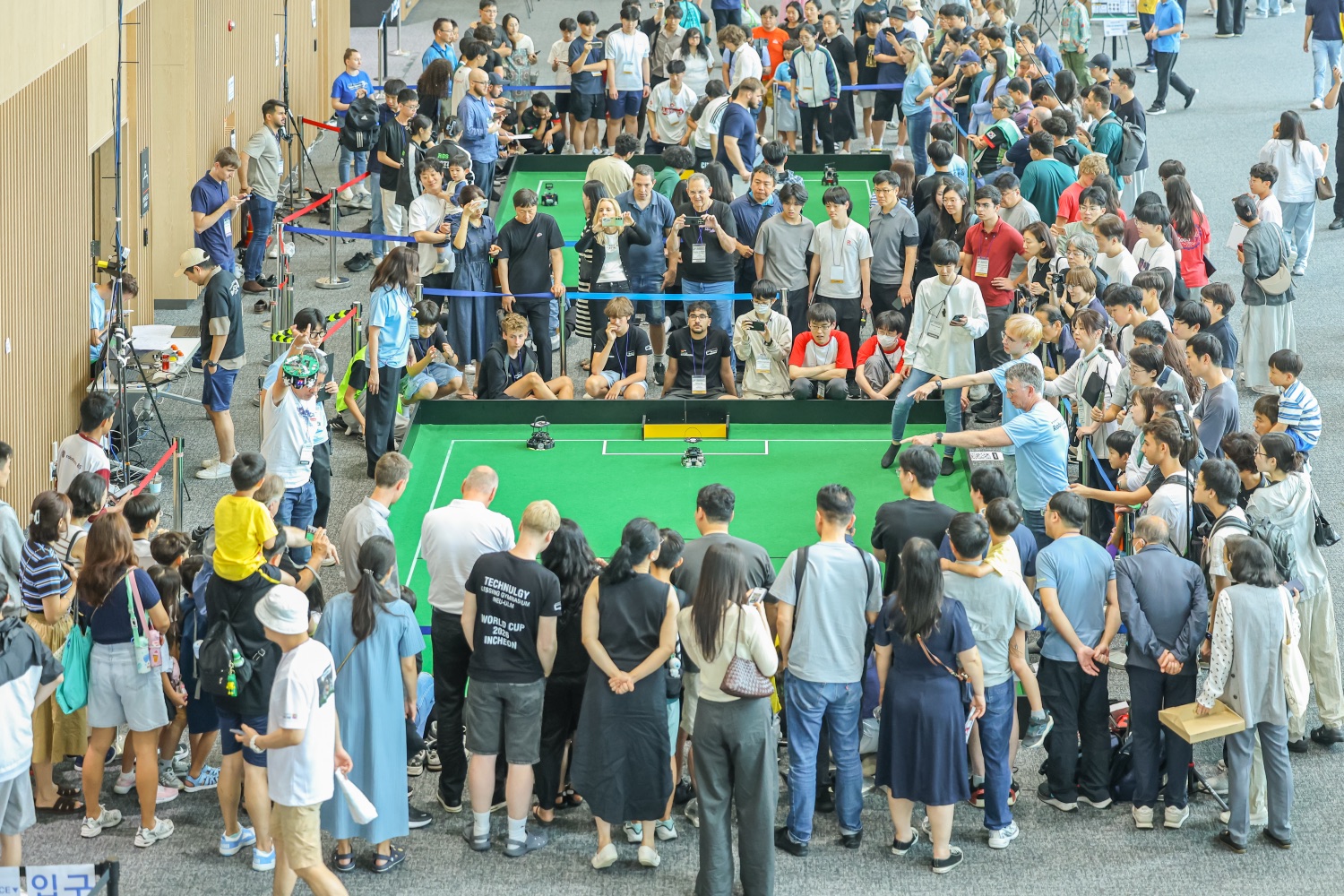
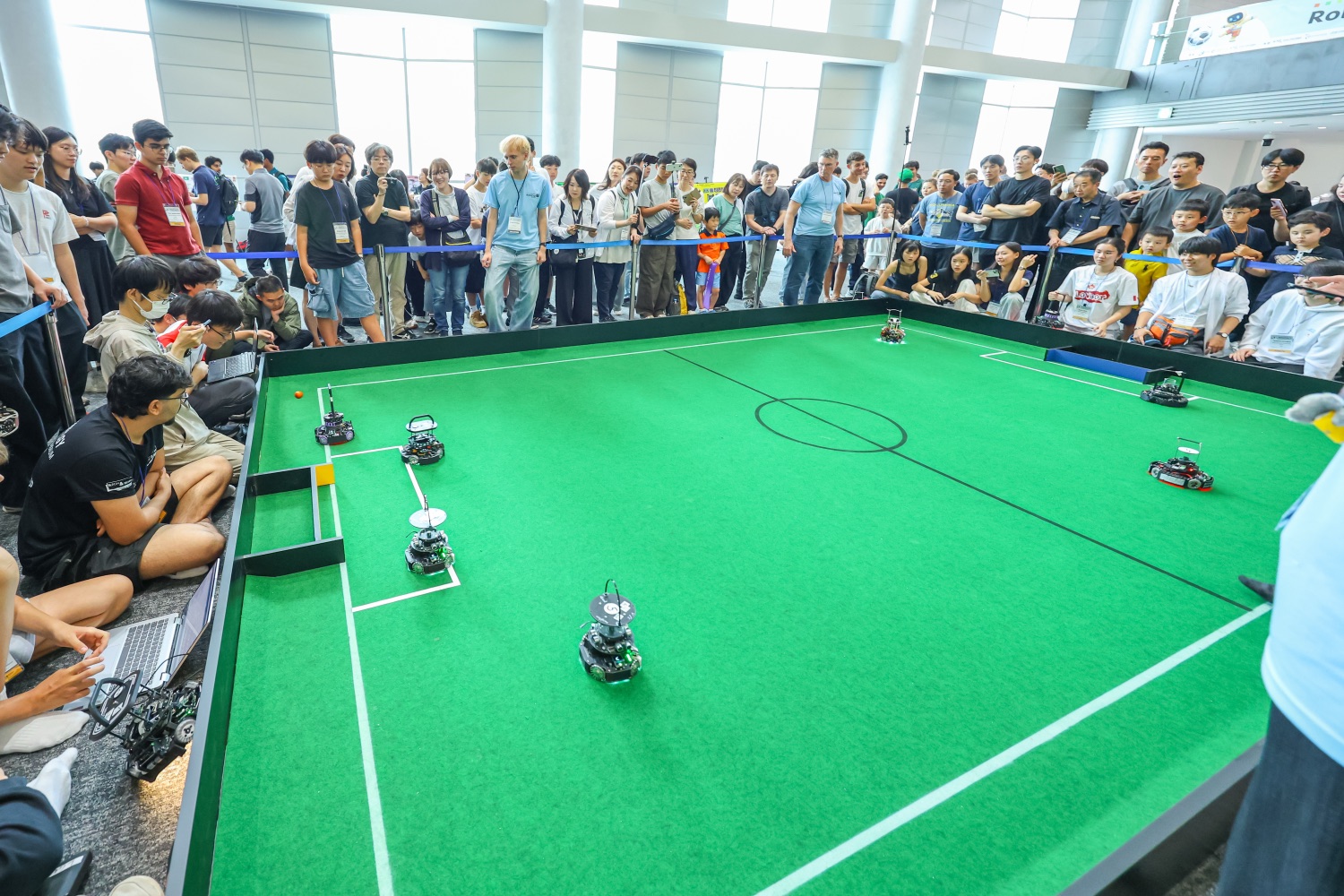
Last year, three teams stood on the same podium at the RoboCupJunior Soccer World Championship. ZG24Robotics from Croatia took first. LNX Robots from Slovakia took second. Team Faabs from Germany took third. They were rivals in the most direct sense there is — they had just spent a week trying to beat each other.
This year, at RoboCup 2026 in Incheon, those same three teams showed up as one team.
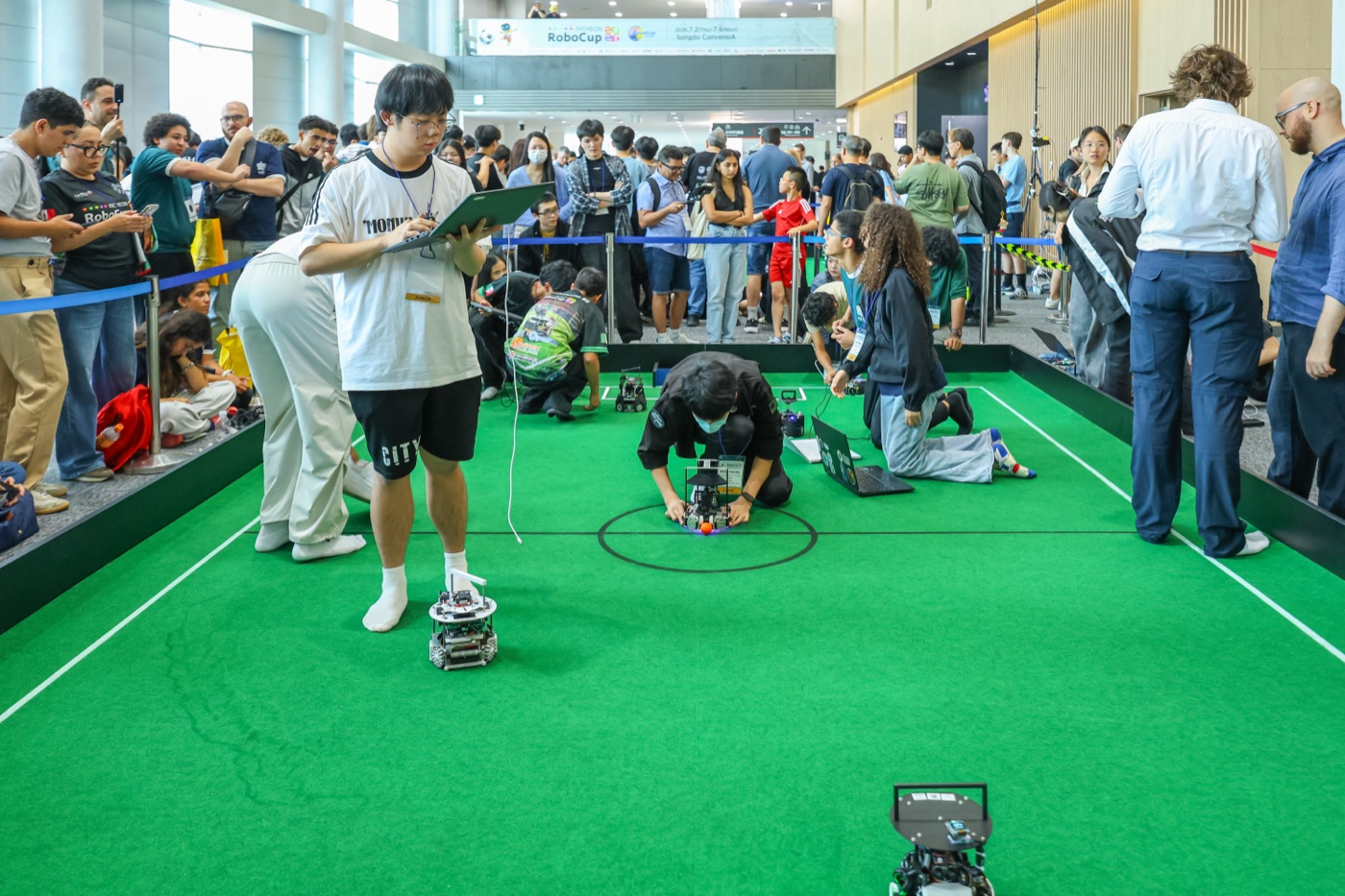
They combined into a single joint venture and applied to compete in the Small Size League — a Major league, the grown-up division, the one that used to feel like a different world from Junior. Three countries, one team, robots built by teenagers, taking a run at the level above them. To my knowledge, it’s the first time a group of Junior champions has made that leap together.
I’ve been part of RoboCup for over fifteen years, and moments like that are why. But I want to use it to make a bigger point, because it’s not a fluke. It’s the visible tip of something we’ve been building on purpose: the pipeline that has to exist if RoboCup’s founding dream is ever going to come true.
The Dream Needs a Pipeline
RoboCup has had the same audacious goal since 1997: by 2050, a team of autonomous humanoid robots that can beat the human World Cup champions. (I’ve written about what that looks like at its awkward, thrilling midpoint elsewhere.) It’s a fifty-year moonshot, and moonshots have a quiet dependency nobody puts on the poster: who is going to build the thing?
The answer is the kids. RoboCupJunior — the entry level, for students up through about age nineteen — is not a cute side program that runs next to the “real” competition. It is the educational pipeline for the 2050 dream. And that word — educational — is the point: this was never a research lab that happens to involve children. It’s the reverse. It’s how we teach, challenge, and grow the humans who will one day build those robots. The engineers who will take the field against the human champions are, right now, eleven-year-olds pushing a line-following robot around a track.
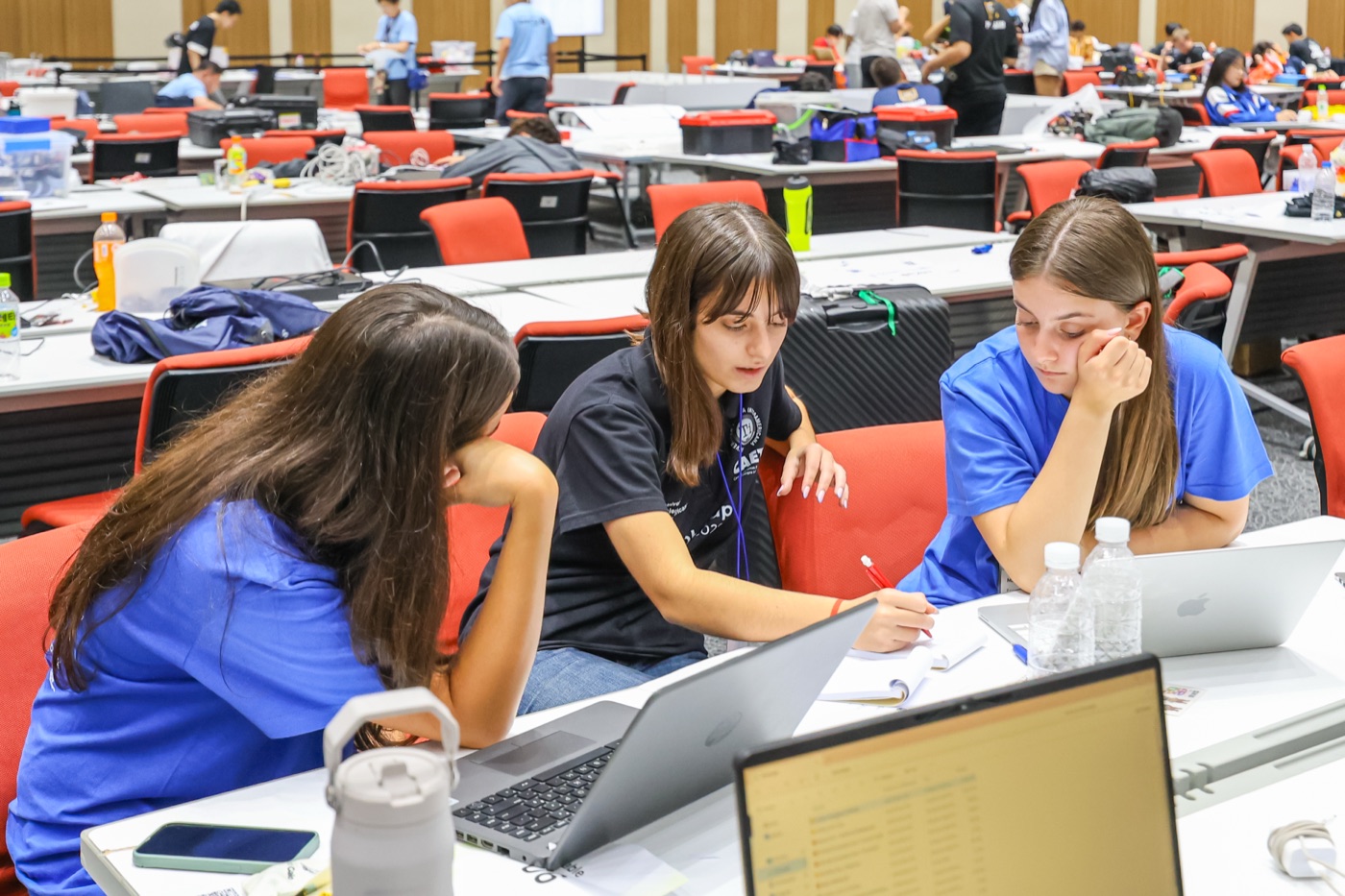
At Incheon this year, that pipeline was not small. RoboCupJunior brought 144 teams and more than 800 people, from 33 countries — nearly half of all the teams at RoboCup — across six leagues, from soccer to disaster rescue to robots that perform on a stage. These aren’t spectators to the 2050 goal. They’re the farm system for it.
There’s one number in there I watch more closely than the rest: this year, girls made up 28% of the Junior field. I’ll be honest — that’s not where we want it. But it’s climbing, and we are pushing hard to make it climb faster, because a pipeline that mostly draws from half the population is leaving half of 2050’s engineers on the sidelines. Widening who gets onto the pipeline matters as much as building the rungs along it.
And here’s the thing about a pipeline: it only works if every rung connects to the next one.
The Missing Rung
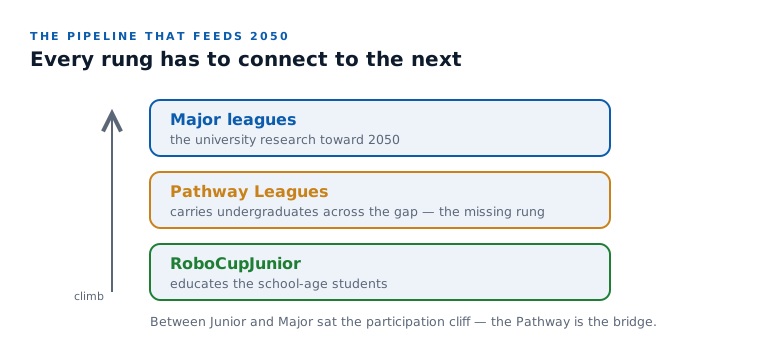
For years, there’s been a rung missing — and we finally named it this year. We call it the participation cliff.
A student can pour six years into RoboCupJunior, get genuinely excellent, and then hit a wall right when they graduate out of the Junior age bracket. The Major leagues — the ones full of university research labs and serious budgets — are a big step up in cost, complexity, and expectation. Too big. So we lose them, exactly at the moment they’re most capable. The pipeline has a gap right where it can least afford one: between the talented eighteen-year-old and the place they could do their best work.
So RoboCupJunior is helping to build the missing rung. A new set of Pathway Leagues, aimed squarely at students roughly 17 to 22 — late high school and undergraduate — designed as a deliberate bridge between Junior and Major. It helps to picture the whole ladder as three rungs: RoboCupJunior educates the school-age students, the Pathway Leagues carry the undergraduates across the gap, and the Major leagues are the research and development — the university labs actually pushing the state of the art toward 2050. The Pathway is the rung that was missing in the middle. The design constraints tell you everything about the intent: a hard budget cap of under $3,000, so cost isn’t the thing that ends a promising student’s run; a schedule built around undergraduate life; a challenge hard enough to be a real next step, not a participation ribbon. It’s the official on-ramp from “talented kid” to “person who could help win in 2050.”
That’s the unglamorous, essential work of a pipeline: not just celebrating the top, but building the step that keeps people climbing.
The Gap Was Narrower Than We Thought
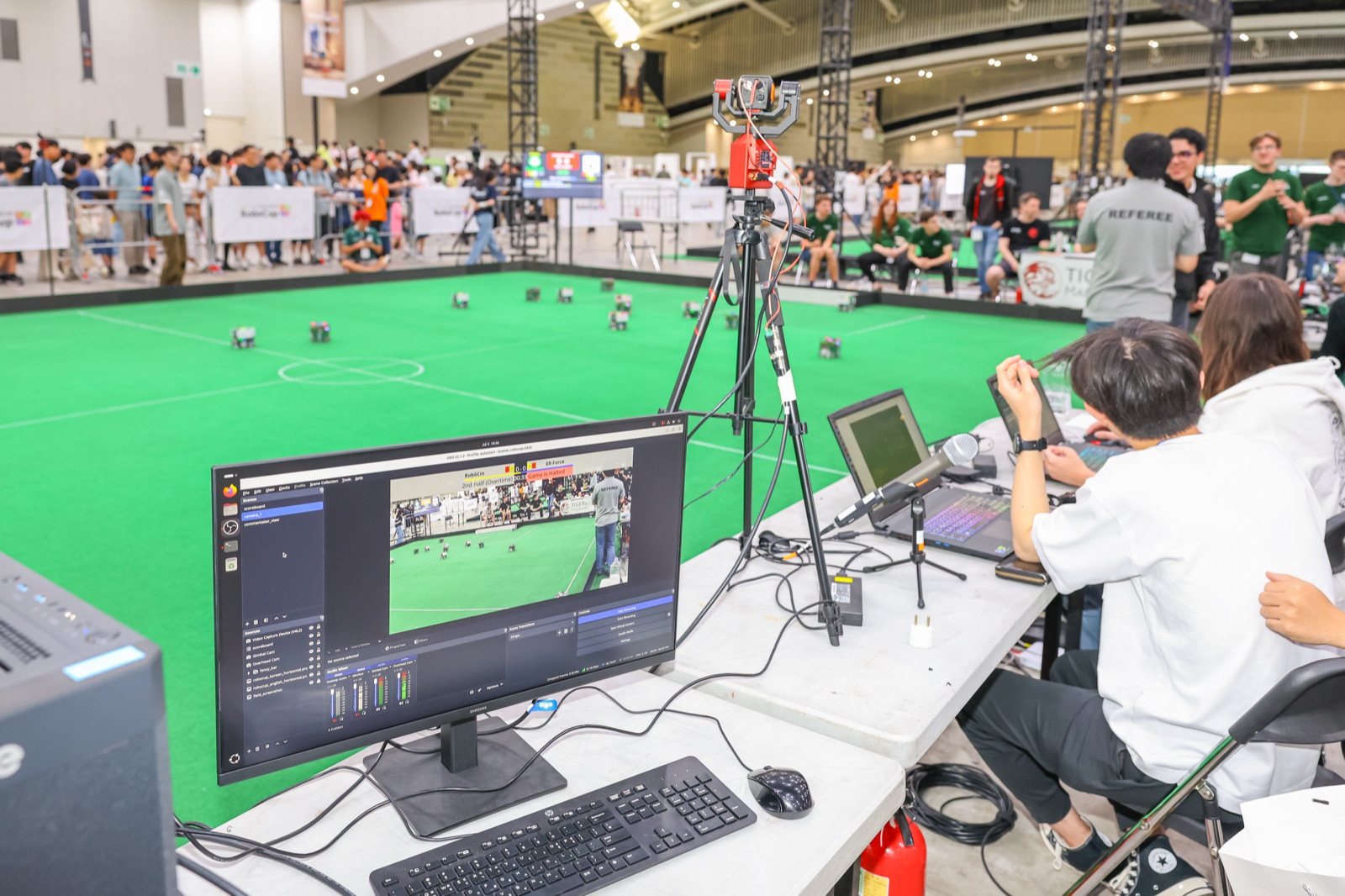
Which brings me back to those three teams who joined forces. Their attempt at the Small Size League wasn’t just a nice story — it was an experiment, and they wrote up what they found.
The question they set out to answer was: how wide is the gap, really, between Junior and Major? And the answer surprised even me. Narrower than we’d assumed. These “Junior” robots already use the same class of technology as the Major league — brushless motors, custom solenoid kickers that can chip the ball over a defender, suspension-based dribblers, onboard AI accelerators doing real-time inference. The teenagers had been quietly building Major-league machines all along. What they needed wasn’t a total redesign. It was a bridge, and someone to help them across it — which is exactly what the committees and liaisons, my longtime collaborator Marek among them, set out to provide.
That’s a pipeline proving itself. The distance from the top of Junior to the bottom of Major turned out to be a step, not a chasm — once someone bothered to build the step.
Redesigning the Challenge for the Age of AI
There’s one more shift from this year I can’t leave out, because it’s the same question the rest of my writing has been circling — just asked by educators instead of engineers.
What is a meaningful challenge for a student now that AI can do so much of the work?
RoboCupJunior is confronting this head-on. In the Rescue leagues, the committees are rewriting the rules about which tools and technologies are allowed, explicitly to keep the challenge meaningful “in the era of vibe coding” — that phrase, from the people who run the league, could have come straight out of From Vibe Coding to AI Engineering. On the stage side, the focus is moving toward genuine, natural interaction between humanoid robots and the students who build them, and away from simple pre-scripted triggers. The bar is being raised on purpose, so that what a young person learns is still theirs — still hard, still human — even in a world where a machine can generate a plausible answer in seconds.
I find that deeply reassuring. The people building the pipeline aren’t trying to protect kids from AI. They’re doing the harder, better thing: redesigning the challenge so that the human learning survives the arrival of the tool. That’s the whole game, at every age.
What I learned: the 2050 dream was never really about robots. It’s about the tens of thousands of humans we develop on the way there — and a moonshot with no pipeline is just a poster. This year I watched the pipeline get more deliberate: a named cliff, a bridge being built across it, and rivals turning into teammates to prove the climb is possible.
Why it mattered: because the robots that eventually take the field in 2050 will be built by people who are, today, somewhere on that pipeline — and whether they make it through depends entirely on whether we bothered to build every rung. That’s not an engineering problem. It’s a human one. It always was.
Robots don’t build themselves — people build them. The dream is only as strong as the pipeline of humans climbing toward it.