How It Started: A New Way to Learn
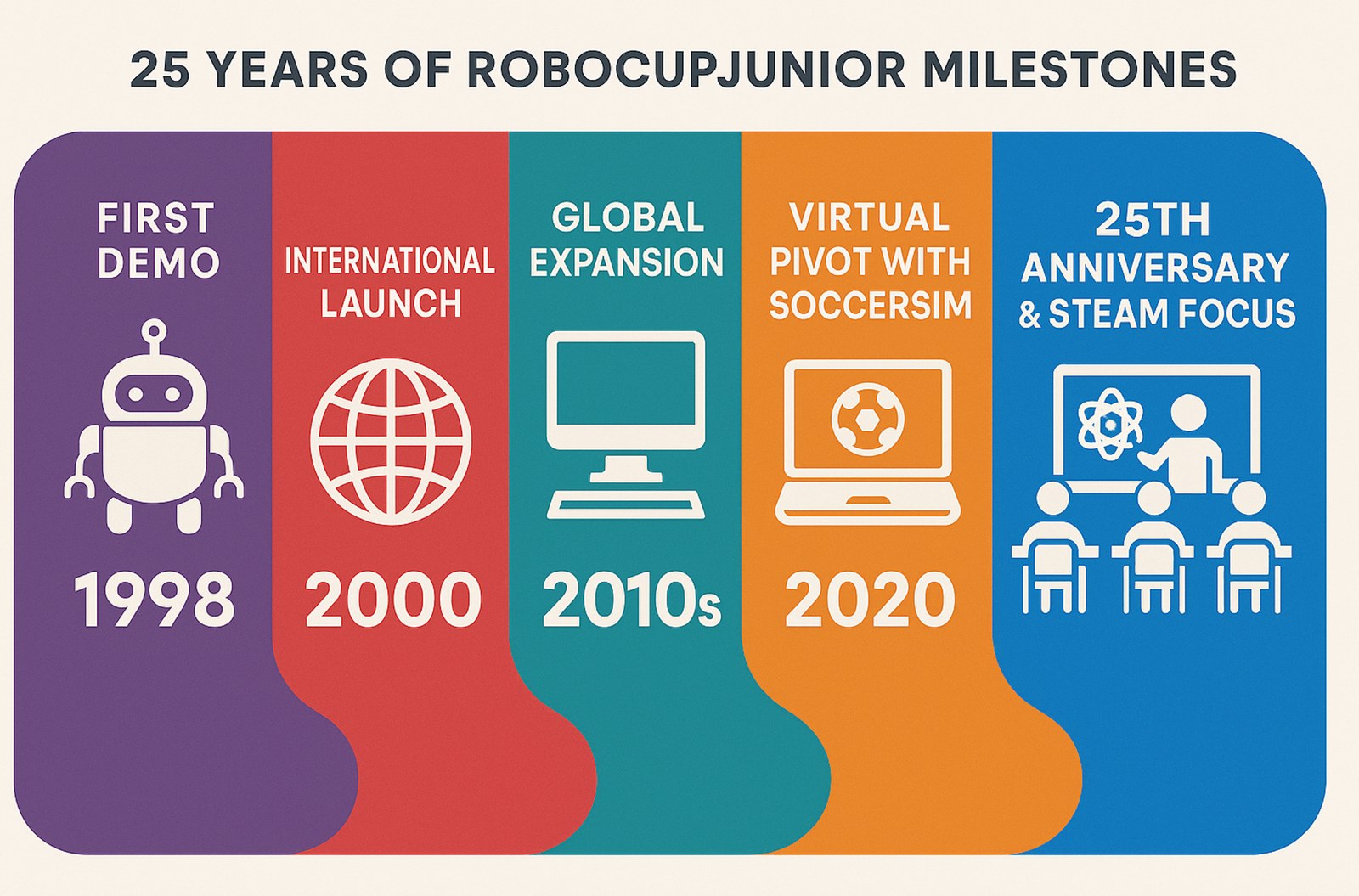
RCJ’s roots trace back to the innovative thinking of educational pioneers who recognized the power of combining technology with hands-on learning. The idea was simple yet radical: let kids build and program autonomous robots, learning by doing instead of memorizing theory. Following interactive workshops in Stockholm in 1999, the first official RoboCupJunior competition was launched in Melbourne, Australia, in 2000, introducing three now-legendary challenges: Soccer, Sumo (later renamed Rescue), and Dance (now known as OnStage).
What set RCJ apart from the start was its commitment to open doors. No matter your background or coding experience, there’s a space for you — robotics isn’t just for prodigies, but for all curious minds. This guiding principle shaped not just the competitions but the RCJ community and everything it stands for.
Twenty-Five Years of Challenge — and Change
So, what’s changed over all these years?
The Leagues Evolved: While core challenges like Soccer, Rescue, and OnStage have stuck around, their rules and goals update every year. The aim? Keep the competition fair, relevant, and challenging. Each update is a response to feedback from participants, educators, and tech advances, ensuring RCJ never stands still.
Global Access: What began as a handful of teams in one country has now expanded to thousands from six continents, encompassing dozens of regional, national, and international events. RCJ scales from local classroom projects up to world-stage championships, with new countries joining and new leagues — like Premier Rescue or Theatre Dance — emerging to reflect local needs.
Adapting to Crises: RCJ’s resilience was most severely tested during the COVID-19 pandemic. With physical events impossible, the community pivoted rapidly to virtual competitions. Tools like SoccerSim (an open-source simulator that allows teams to program and compete in Python) ensured that learning and collaboration never stopped, even in isolation. Teams could join in from anywhere, breaking down access barriers worldwide.
Expanding the Toolkit: Over the years, the available technology diversified. Beyond LEGO, students now work with Arduino, open-source parts, and new sensors. This openness means that nearly any school, regardless of its resources, can craft a meaningful RCJ experience for its students.
New Kinds of Challenges: Since the 2010s, ’technical challenges’ — like integrating advanced sensors, navigating real-world environments, or implementing AI — have kept students and mentors striving for more. The events themselves become more like real-world engineering problems, preparing youth for a changing workplace.
Supporting Classroom STEAM, Not Just Competition
Perhaps the most significant shift is how RCJ has evolved from an extracurricular activity to a genuine part of STEAM learning in classrooms.
Learning by Building: Inspired by Seymour Papert’s constructionism and Howard Gardner’s multiple intelligences, RCJ integrates hands-on robotics with project-based learning. Students develop coding, engineering, and creative art skills in one go, learning resilience and teamwork as they debug both code and group dynamics.
Teacher and Mentor Partnerships: RCJ actively engages teachers in its initiatives. Workshops and curriculum resources help educators turn robotics from an afterthought into a core part of classwork, complementing lessons in math, art, and language alike.
Access and Inclusion: With affordable kits and a culture of openness, RCJ significantly lowers entry barriers. Any team of motivated students — no matter where they’re from — can join, supported by a readiness to accept all levels, from beginners to experts.
Real-World Skills: Presentations, teamwork, creative storytelling, and intercultural dialogue aren’t just side effects — they’re vital parts of every event. Students aren’t just building robots; they’re building confidence, communication skills, and lifelong friendships.
Voices and Milestones From the Community
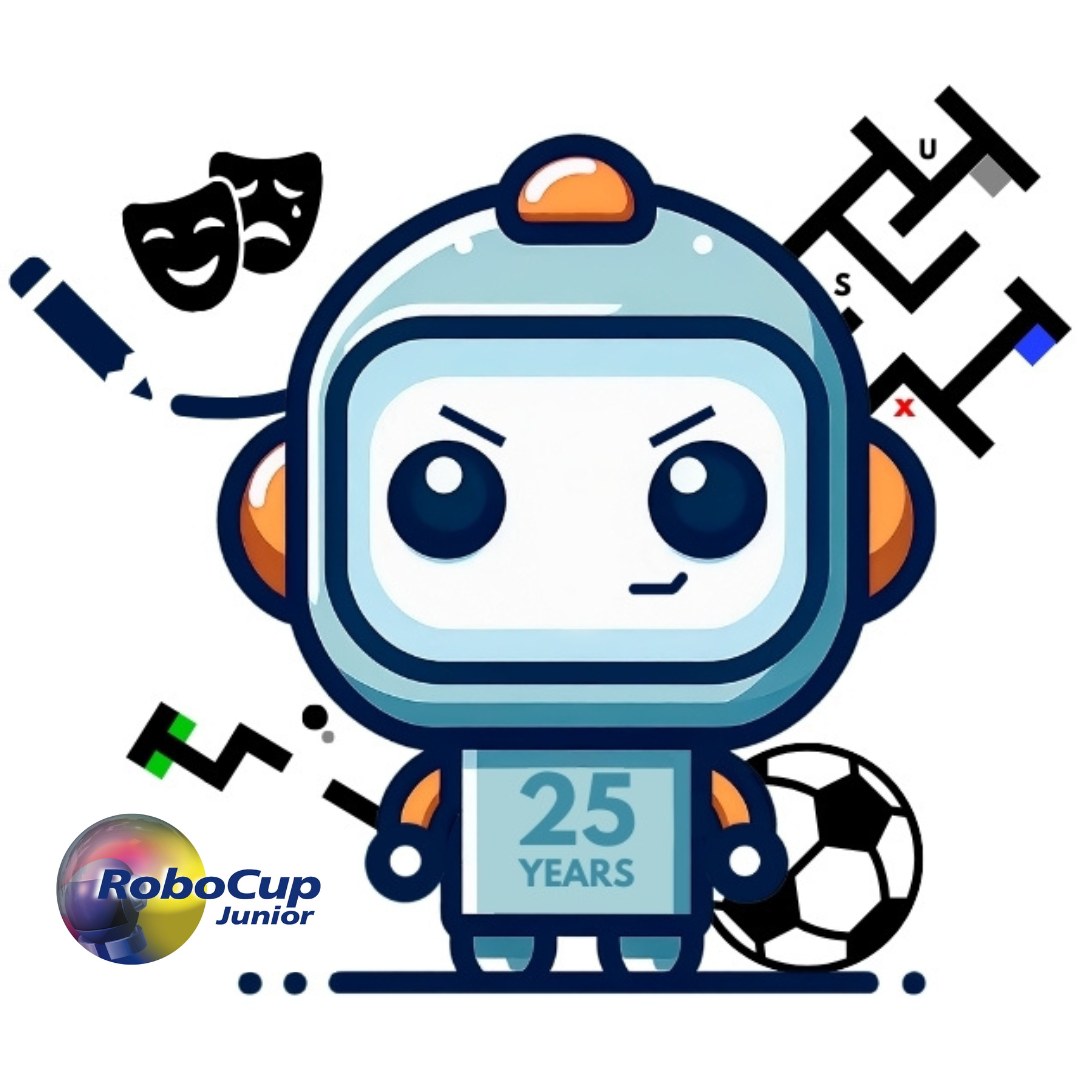
Every year, the rules and events are shaped by the community itself, through open calls and forums for suggestions. The 25th birthday even produced a new global anniversary logo, designed by Fernanda Lima from Brazil, showing the next generation is not just joining, but leading.
However, the real legacy lies in alums who go on to contribute to robotics, AI, education, and design — often citing RCJ as their first taste of possibility.
As someone who started as a participant, it’s deeply meaningful to reflect on how this program has shaped my life — and the lives of so many others.
🙏 To every student, parent, mentor, volunteer, regional rep, committee member, organizer, general chair, exec, and trustee: thank you. Your passion made this more than a competition — it made it a movement.
Looking Forward: RoboCupJunior’s Lasting Impact
RCJ’s journey isn’t just a story of challenges won and robots built. It’s about how a global network grew to keep STEAM education relevant, collaborative, and fun. The move to virtual and hybrid events during the pandemic hasn’t faded away — it’s now a permanent feature, making robotics more accessible than ever for students everywhere.
For a generation, RCJ has equipped students not only with technical expertise but also with curiosity, resilience, and the confidence to shape technology for the better. Its blend of tradition and constant reinvention ensures that, after 25 years, RoboCupJunior is just getting started.
RoboCupJunior at 25 is proof that when community, curiosity, and opportunity come together, innovation follows — for classrooms, for competitions, and a more hopeful, inclusive future in STEAM.
References
- https://junior.robocup.org/happy-25th-birthday-robocupjunior/
- https://junior.robocup.org/history/
- https://en.wikipedia.org/wiki/RoboCup_Junior
- https://ai.sony/blog/RoboCup-and-Its-Role-in-the-History-and-Future-of-AI/
- https://www.robocupjunior.org.au/about-us/history/
- https://www.frontiersin.org/journals/robotics-and-ai/articles/10.3389/frobt.2022.915322/full
- https://www.stormingrobots.com/prod/rcj-history.html
- https://www.youtube.com/watch?v=Xwy9EdFuVVQ
- https://en.wikipedia.org/wiki/RoboCup